The Muarajambi Temple Compound Site has outstanding universal value as seen from the cultural heritage findings and the relatively intact and preserved environment that has been maintained by the local community. Having such values, the Muarajambi Temple Compound Site has the potential to be nominated as a Word Heritage under the criteria in the Operational Guidelines for the Implementation of the Word Heritage Convention, as follows:
(ii) To exhibit an important interchange of human values, over a span of time or within a cultural area of the world, on developments in architecture or technology, monumental arts, town-planning or landscape design
The Muarajambi Temple Compound Site illustrates the exchange of culture and human values over a span of time within the period of the Hinduism - Buddhism culture in Indonesia and specifically in Jambi. The values of humanities are reflected in the building of the temples based on the philosophy of Hinduism-Buddhism. In terms of technology and architecture, the structures illustrate the skills and the knowledge in various fields starting from selecting the location, method of constructing the temple and land use adjusted to the geographical condition and environment of the temple compound. The Muarajambi region -that is located in the natural leavee of Batanghari River and is a floodprone area- has been realigned to become a viable area for worship rituals and for settlement at that time. The findings of man-made canals -that pass around the temple complex and the water reservoirs- are evidence that the people of the past have the local wisdom to conserve water, use the canals for transportation, obtain source of protein from the various fish cultivated in these canals connected to the Batanghari River.
From the architectural point of view, it is apparent that the local community of that time around the Muarajambi temple compound already possessed the capacity to design and build structures from bricks following the Hinduism-Buddhism philosophy. The technology in producing brick blocks -starting from selecting the material, molding, heating, and applying construction techniques- is considered as unique knowledge and skills of the people in that age.
(iii) To be a unique or at least exceptional testimony to a cultural tradition or to a civilization which is living or which has disappeared
The Muarajambi Temple Compound Site is evidence of a civilization that was built in the age of the ancient Malay Kingdom around the 7th Century AD up to the 14th Century (in the Hinduism-Buddhism era in Jambi).
(iv) Be an outstanding example of a type of building, architectural or technological ensemble or landscape which illustrates significant stages in traditional human settlement, land use, or water management that represents cultural values or the interaction of a culture (or cultures), or the interaction of humans with nature, especially when it has become vulnerable under the impact of irreversible change;
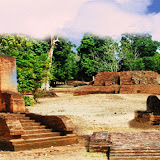
From the architectural stand point, the Muarajambi temple compound are typical structures built in the age of the Hinduism-Buddhism era in Sumatera around the 7th Century AD up to the 14th Century AD. There were at least 82 ruins of ancient buildings that were discovered in this site. Seven of them have been exposed and have been given intensive conservation treatment, namely the Gumpung, Tinggi I, Tinggi II, Kembar Batu, Astano, Gedong I and Gedong II, and the Kedaton Temple.
source: http://whc.unesco.org/en/tentativelists/5465/
Tuesday, December 15, 2009


Subscribe to:
Post Comments (Atom)

0 comments:
Post a Comment
leave your comment