
The ancient canal network in Muarajambi archaeological site are Melayu river, Terusan river, Jambi river, Johor ditch, Sekapung ditch, Buluran Dalam river, Buluran Keli river, Buluran Paku, and Selat river. This canal network interconnected to tributaries along Batanghari watershed and flows along the Muarajambi site area. The tributaries are Seno river, Amburan Jalo and Berembang river. As canal network knot, Berembang river has important role as the ancient canals circulation connected with the Berembang river before then flowing to Batanghari river.
Batanghari river and the canals flow and located in the Muarajambi temple compound is inseparable part of the land where holy structures are built. Batanghari river as cruise line to connect the Muarajambi temple site area to mobility of community in Jambi territorial and its environs as well as other territorials in Nusantara and oreign people including Chinese, India, and even people from central Asia.
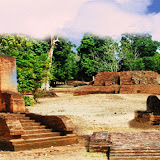
Furthermore, the ancient canals developed in the same time with the temple construction is landscape unity as water use network, crossing each other and develop a ‘protection system’ for the Muarajambi temple site. In this case, symbolically the canals function as boundary between the sacral and profane. Dalam hal ini secara simbolis fungsi kanal merupakan batas antara yang sakral dan profan. The ’holied’ land is bound and specialized as location for temple construction are inside the canal network. Functionally, the canal is not only developed to support population and comers in the Muarajambi site, but also symbolically related to macrocosmic and microcosmic world in Buddhism. In this case, the ancient canals indicate symbol, while the mountain are represented by the temple structure.



0 comments:
Post a Comment
leave your comment